
 99%+ Purity with 3rd party testing
  10% off first order
  Volume Discounts
  Fast & Free Shipping
  Refund Guarantee
  24/7 Customer Service


What is GHK-Cu?
The Science and Research Behind the Copper Peptide
Introduction
GHK-Cu (glycyl-L-histidyl-L-lysine:copper), often called the “copper peptide,” is a naturally occurring compound found in human plasma, saliva, and urine. First identified in the 1970s, GHK-Cu is now widely studied for its potential role in skin repair, hair growth, wound healing, and tissue regeneration. In research and cosmetic contexts, it’s known as GHK-Cu peptide, GHK copper peptide, or simply copper peptide .
GHK-Cu Fast Facts
- Peptide sequence: Gly-His-Lys (GHK), forms a complex with copper ions (Cu²⁺)
- Where found: Human plasma, skin, saliva, urine
- Nicknames: GHK-Cu, GHK Cu Peptide, Copper Peptide, GHK Peptide, GHK Copper Peptide
- Primary functions in research: Promoting skin and tissue repair, supporting hair growth, modulating inflammation, and protecting against oxidative damage.
Why is GHK-Cu Called the “Copper Peptide”?
GHK is a naturally occurring tripeptide (three amino acids). When it binds to a copper ion, it becomes GHK-Cu—a biologically active copper peptide. This copper binding is believed to be central to GHK-Cu’s effects on tissue remodeling, antioxidant defense, and cellular signaling.
GHK-Cu in Research: Key Applications
- Skin regeneration: Supports collagen production, reduces wrinkles, and improves skin elasticity
- Hair growth: Promotes hair follicle stem cell activity and may increase hair density
- Wound healing: Accelerates tissue repair and reduces inflammation in animal and cell studies
- Anti-aging: May improve skin tone, reduce fine lines, and support youthful tissue structure
- Other effects: Investigated for nerve repair, organ protection, and anti-oxidant effects
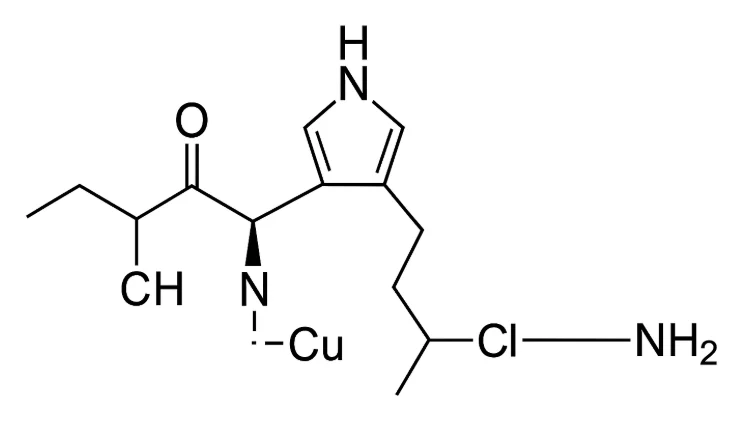
How is GHK-Cu Used in Research and Cosmetics?
- Topical products: Skin creams, serums, and hair treatments (cosmetic use)
- Laboratory research: Cell culture and animal studies on wound healing, skin regeneration, and anti-aging
- Note: All research peptides—including GHK-Cu—sold for lab use are not for human consumption, diagnosis, or therapy outside approved clinical studies.
GHK-Cu vs. Other Peptides
- BPC-157 and TB-500: Focus more on muscle/tendon healing and systemic repair
- GHK-Cu: Especially valued for skin, hair, and cosmetic/dermatology applications, but also explored for broader regenerative effects
- Copper peptide: The umbrella term, but GHK-Cu is by far the best-studied copper-binding peptide in both research and cosmetic settings
Common Synonyms & Search Terms
- ghk-cu, ghk cu peptide, ghk-cu peptide, ghk copper peptide, copper peptide ghk-cu, ghk-cu copper peptide, ghk peptide, copper peptide, ghk/cu
Summary
GHK-Cu (copper peptide) is a naturally occurring tripeptide-copper complex that plays important roles in tissue repair, skin health, and hair growth. Its diverse research applications and popularity in the skincare world make it one of the most widely discussed and studied peptides today.
FAQs About GHK-Cu
What is GHK-Cu?
GHK-Cu (glycyl-L-histidyl-L-lysine:copper) is a naturally occurring copper peptide found in human plasma, skin, and saliva, known for its research applications in skin repair, hair growth, and wound healing.
What does GHK-Cu do?
In research, GHK-Cu supports collagen production, tissue regeneration, hair follicle health, and skin elasticity.
Is GHK-Cu the same as copper peptide?
GHK-Cu is the best-known copper peptide, but ‘copper peptide’ can refer to any peptide that binds copper. GHK-Cu is the most studied in research and skincare.
Where is GHK-Cu used?
GHK-Cu is used in laboratory research, as well as in skincare and hair products for its potential to promote skin healing and hair growth.
Related Articles
- How Does GHK-Cu Work
- GHK-Cu Benefits
- GHK-Cu Side Effects & Safety
- BPC-157 vs TB-500 vs GHK-Cu
- What is BPC-157
- What is TB-500
References
- Pickart L, Thaler MM. Tripeptide in human plasma that increases the survival of hepatocytes and skin fibroblasts. J Invest Dermatol. 1973;60(5):281-286. https://pubmed.ncbi.nlm.nih.gov/4267505/
- Pickart L, Margolina A. GHK-Cu peptide in skin remodeling and aging. J Biomater Sci Polym Ed. 2018;29(13):1820-1837. https://pubmed.ncbi.nlm.nih.gov/30049241/
- Pickart L. GHK-Cu: Biochemistry and Biological Effects. J Biomater Sci Polym Ed. 2020;31(13):1754-1775. https://pubmed.ncbi.nlm.nih.gov/32757785/
- Alavi A, Stoopler ET. GHK-Cu and wound healing: review of clinical studies. Wounds. 2020;32(5):126-132. https://pubmed.ncbi.nlm.nih.gov/32364603/
- Farris PK. Cosmeceuticals and Cosmetic Practice. Wiley-Blackwell. 2014. https://www.wiley.com/en-us/Cosmeceuticals+and+Cosmetic+Practice-p-9780470654550
