
 99%+ Purity with 3rd party testing
  10% off first order
  Volume Discounts
  Fast & Free Shipping
  Refund Guarantee
  24/7 Customer Service


How Does NAD⁺ Work?
Mechanism of Action & Scientific Pathways
Introduction:
The phrase “mechanism of action” refers to the biological processes through which a molecule produces its effects. In the case of NAD⁺ (nicotinamide adenine dinucleotide), research demonstrates its ability to support energy metabolism, DNA repair, cellular signaling, and longevity by acting as a central metabolic coenzyme and regulator of sirtuins and other repair enzymes.¹²³
NAD⁺ Mechanism of Action: The Science Explained
NAD⁺ is not a “magic bullet” but an essential cellular currency, orchestrating multiple p1. Redox Reactions & Cellular Energy
NAD⁺ acts as an electron carrier in redox reactions—accepting electrons and becoming NADH during glycolysis and the Krebs cycle. It then donates electrons to the mitochondrial electron transport chain, allowing for efficient ATP (energy) production.¹²
Why this matters: Nearly all living cells require NAD⁺ to convert nutrients into usable energy.
2. Sirtuin Activation
Sirtuins are a family of enzymes (“longevity proteins”) that regulate metabolism, stress resistance, DNA repair, and inflammation. Sirtuins require NAD⁺ as a substrate to function; low NAD⁺ impairs their activity.¹³
Why this matters: Sirtuin activation links NAD⁺ to healthy aging, metabolic balance, and cellular resilience.
3. DNA Repair & PARP Activation
NAD⁺ is essential for the activity of PARPs (poly-ADP ribose polymerases), enzymes that detect and repair DNA damage. When DNA breaks occur, PARPs use NAD⁺ to add ADP-ribose units to proteins, facilitating the DNA repair process.¹³
Why this matters: Robust DNA repair protects cells from mutations and age-related decline.
4. Mitochondrial Biogenesis & Health
NAD⁺ is required for mitochondrial biogenesis and function, supporting the production and maintenance of new mitochondria while protecting cells from oxidative stress.²³
Why this matters: Healthy mitochondria = more cellular energy, less fatigue, and better resilience against aging.
5. Cell Signaling & Calcium Homeostasis
NAD⁺ acts as a precursor to signaling molecules (like cyclic ADP-ribose) that regulate calcium flow within cells, impacting nerve transmission and cellular stress responses.¹²
Why this matters: Precise calcium signaling is vital for muscle function, cognition, and cell survival.
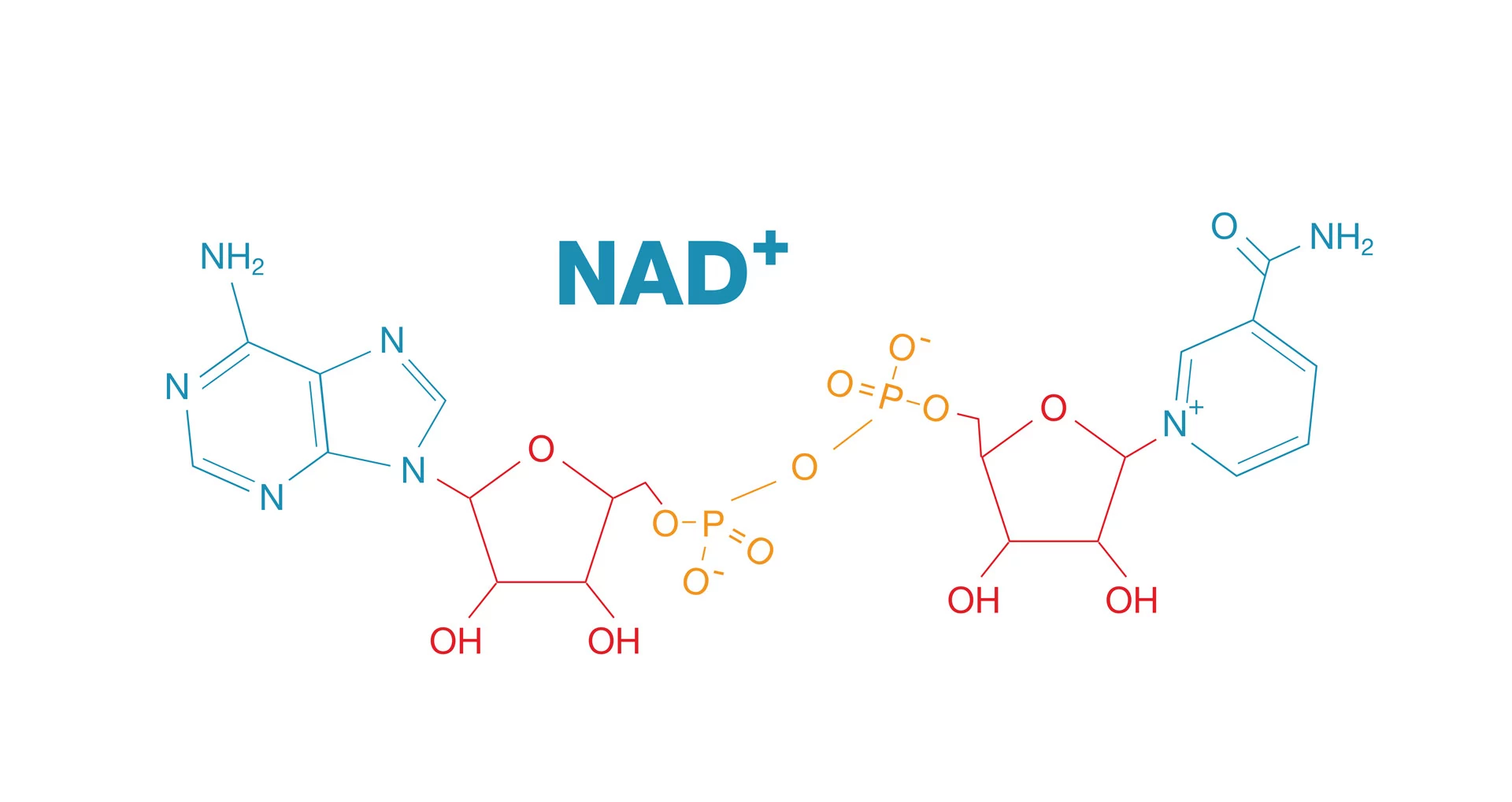
NAD⁺: Multi-Target Regulator, Not a Single Pathway
Unlike some molecules that work via a unique receptor, NAD⁺ coordinates multiple pathways simultaneously—serving as a “hub” for cellular survival, repair, and energy.¹²³
- Declines in NAD⁺ are linked to fatigue, mitochondrial dysfunction, and age-related disease.
Supplementing NAD⁺ or its precursors (NR, NMN) aims to restore these pathways for better health and longevity.²³
FAQs About NAD⁺ Mechanism
How does NAD⁺ help cells produce energy?
By shuttling electrons in metabolic reactions, NAD⁺ enables cells to create ATP—the body’s energy currency.
Why is NAD⁺ important for aging?
NAD⁺ powers sirtuins and DNA repair enzymes, both of which are linked to longevity and slowing cellular aging.
How is NAD⁺ different from NR and NMN?
NR and NMN are NAD⁺ precursors—cells convert them into NAD⁺ to support the same metabolic and repair pathways.
Can boosting NAD⁺ help with fatigue or brain function?
Research suggests improved NAD⁺ levels enhance mitochondrial function, which can positively impact energy and cognition.
Is NAD⁺ a vitamin or a coenzyme?
NAD⁺ is a coenzyme, made from vitamin B3 (niacin) derivatives in the diet.
Related Articles
- What is NAD+
- NAD+ Benefits
- NAD⁺ Side Effects & Safety: What the Research Says
- NAD vs NMN vs NR
- What is MOTS-C
- How does MOTS-C Work
- MOTS-C Benefits
- MOTS-C Side Effects & Safety
References
- Verdin E. NAD⁺ in aging, metabolism, and neurodegeneration. Science. 2015;350(6265):1208–1213. https://www.science.org/doi/10.1126/science.aac4854
- Yoshino J, Baur JA, Imai S. NAD⁺ intermediates: The biology and therapeutic potential of NMN and NR. Cell Metab. 2018;27(3):513–528. https://pubmed.ncbi.nlm.nih.gov/29474950/
- Covarrubias AJ, Perrone R, Grozio A, Verdin E. NAD⁺ metabolism and its roles in cellular processes during ageing. Nat Rev Mol Cell Biol. 2021;22(2):119–141. https://pubmed.ncbi.nlm.nih.gov/33230262/
