
 99%+ Purity with 3rd party testing
  10% off first order
  Volume Discounts
  Fast & Free Shipping
  Refund Guarantee
  24/7 Customer Service


MOTS-C Clinical Trials & Research Status
Introduction:
MOTS-C is a mitochondrial-derived peptide (MDP) discovered in 2015 and studied for its role in metabolism, exercise performance, and aging.¹ While most evidence comes from animal and cell studies, human clinical trials are now emerging. This article reviews the current state of MOTS-C research.
Preclinical Research
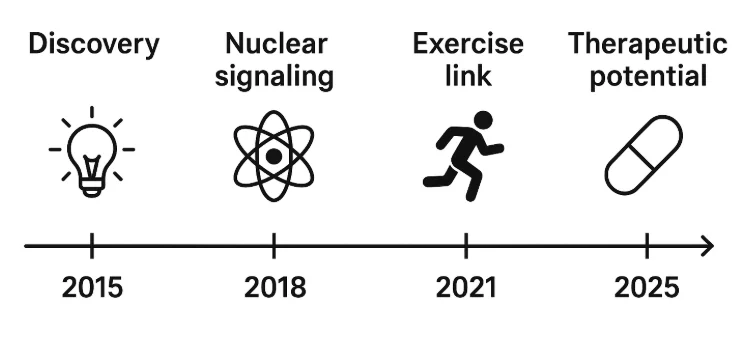
- Initial studies showed MOTS-C activates AMPK, improves glucose uptake, and reduces obesity-related insulin resistance.¹
- In mouse models, MOTS-C extended lifespan and improved markers of physical and metabolic health.²
- These findings positioned MOTS-C as a candidate for metabolic and geroscience research.
Human Studies
- Exercise & Aging (2021): Reynolds et al. reported that MOTS-C rises during physical activity and declines with age. Supplementation in older adults improved exercise capacity in early-stage trials.³
- Metabolic Health (Ongoing): Small clinical studies are investigating MOTS-C’s effects on insulin sensitivity and glucose control. Results are promising but unpublished.
- Longevity Research: Exploratory trials are considering MOTS-C as part of broader anti-aging interventions, though no FDA-approved therapies exist.
Current Clinical Trial Status
- Phase I/II: Safety and metabolic endpoints are being tested in small cohorts.
- Not FDA-approved: MOTS-C remains a research-use-only compound.
- Future Directions: Larger, randomized human trials are needed to confirm metabolic and aging-related effects.
Challenges & Unknowns
- Limited data: Only a handful of small human trials exist.
- Long-term effects: Unknown, especially regarding aging and cancer risk.
- Regulation: Without FDA approval, use is restricted to laboratory research.
Summary
MOTS-C has moved from preclinical promise to early human trials, with initial findings supporting roles in metabolism, exercise, and aging. However, most of the evidence remains preclinical, and large-scale trials are needed to confirm its safety and efficacy. MOTS-C is one of the most intriguing mitochondrial peptides, but its clinical future is still unfolding.
FAQs About MOTS-C Clinical Trials
Are there human trials on MOTS-C?
Yes, small Phase I/II studies have tested MOTS-C for metabolic and exercise endpoints.
What do trials show so far?
They suggest safety and potential improvements in glucose regulation and endurance.
Is MOTS-C FDA-approved?
No, MOTS-C remains research-only.
What’s next for MOTS-C research?
Larger, randomized human trials are needed to confirm its potential applications.
Related Article
- What is MOTS-C
- How Does MOTS-C Work
- MOTS-C Benefits
- MOTS-C Side Effects & Safety
- What is NAD+
- NAD+ Benefits
- NAD+ Side Effects & Safety
References
- Lee C, et al. “The mitochondrial-derived peptide MOTS-c promotes metabolic homeostasis and reduces obesity and insulin resistance.” Cell Metab. 2015;21(3):443–454. https://pubmed.ncbi.nlm.nih.gov/25738459/
- Lu H, et al. “Mitochondrial-derived peptide MOTS-c increases healthspan and lifespan in mice.” Aging Cell. 2019;18(6):e13030. https://pubmed.ncbi.nlm.nih.gov/31608986/
- Reynolds JC, et al. “MOTS-c is an exercise-induced mitochondrial-encoded regulator of age-dependent physical decline.” Nat Commun. 2021;12:470. https://pubmed.ncbi.nlm.nih.gov/33563973/
